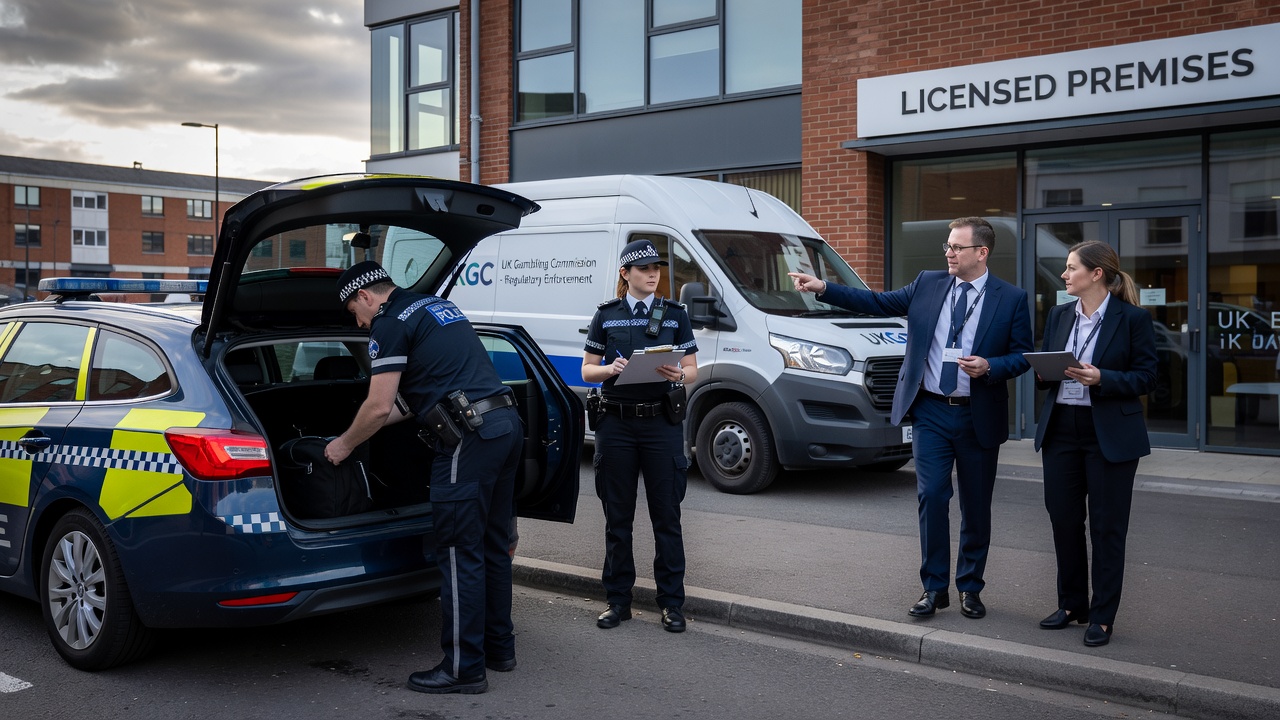
UK Gambling Commission Backs Coordinated Police Raids on Unlicensed Gambling Operations in Sheffield and Doncaster
The UK Gambling Commission supported South Yorkshire Police during a joint operation that focused on illegal gambling and suspected organised criminal activity across Sheffield and Doncaster, with officers carrying out raids on several unlicensed gambling dens as part of continued efforts to address operators working outside the regulated framework.
Details of the Coordinated Enforcement Action
Officers executed the raids after intelligence indicated the presence of unlicensed premises where gambling activities were taking place without the required permissions, and the Gambling Commission provided specialist support to help identify and disrupt these sites while gathering evidence related to potential links with broader criminal networks. The operation formed part of ongoing work between the regulator and regional police forces to tackle premises that operate without licences issued under the Gambling Act 2005.
Enforcement teams targeted multiple locations in both cities during the coordinated sweeps, seizing equipment and records that investigators will now examine to determine the full scope of the activity and any connections to organised groups. Those who study regulatory actions note that such joint efforts often reveal patterns where unlicensed venues serve as hubs for additional offences beyond gambling itself.
Role of the Gambling Commission in Regional Operations
The Gambling Commission maintains a dedicated intelligence and enforcement function that assists police forces when unlicensed gambling activity intersects with wider criminal concerns, and in this instance the regulator supplied information and expertise that helped shape the planning and execution of the Sheffield and Doncaster raids. According to the official announcement available on the regulator’s site, the Commission continues to prioritise collaboration with law enforcement to reduce the footprint of illegal operators who evade licensing requirements.
Data from similar past interventions shows that raids on unlicensed dens frequently uncover cash-handling practices and record-keeping methods that fall short of the standards expected in licensed environments, giving investigators additional lines of inquiry. Observers note that the regulator’s involvement helps ensure that gambling-specific legislation is applied correctly alongside general criminal statutes.
Geographic Focus on Sheffield and Doncaster
Sheffield and Doncaster were selected for this phase of enforcement because intelligence assessments identified clusters of unlicensed activity in both areas, with premises operating without the oversight that licensed operators must follow regarding player protection and financial controls. South Yorkshire Police led the physical execution of the warrants while the Gambling Commission contributed remote and on-site advisory support throughout the process.
Investigators documented the layout and operations of each raided site, collecting materials that will feed into subsequent prosecutions or further multi-agency work. Those who have examined previous cases in the region point out that unlicensed venues sometimes change locations quickly once enforcement pressure increases, making timely intelligence sharing between the Commission and police essential for sustained results.
Context Within Broader Regulatory Enforcement
The action in Sheffield and Doncaster sits within a longer-running programme of work by the Gambling Commission to identify and close down illegal gambling operations wherever they appear, whether in physical premises or online. The regulator regularly publishes updates on enforcement activity, and the most recent announcement concerning this police-supported operation can be found under the heading Commission supports police action targeting illegal gambling activity (news announcement).
Figures released by the Commission over recent years indicate a steady stream of interventions against unlicensed operators, with many cases involving collaboration with local police forces that possess the operational capacity to carry out raids and secure evidence. This approach allows the regulator to focus on its licensing and compliance remit while drawing on police powers for physical enforcement.
Next Steps and Ongoing Monitoring
Following the raids, investigators will analyse seized materials to build cases against individuals connected to the unlicensed dens, and the Gambling Commission will continue to monitor the areas for any resurgence of similar activity. South Yorkshire Police have stated that further operations remain under consideration as part of their commitment to disrupting organised criminal networks that exploit gambling venues.
Regulatory records show that operators found running unlicensed premises can face both criminal prosecution and financial penalties, with the Commission able to pursue additional civil measures where evidence supports such action. The current operation demonstrates how information exchange between the regulator and police helps target resources effectively in specific localities.
Conclusion
The joint work between teh UK Gambling Commission and South Yorkshire Police in Sheffield and Doncaster illustrates one concrete example of how regulatory and law-enforcement bodies combine their respective authorities to address unlicensed gambling and associated criminal concerns. As the investigation proceeds, the materials gathered during the raids will inform decisions about prosecutions and any additional enforcement steps required to maintain compliance with gambling legislation across the region.